
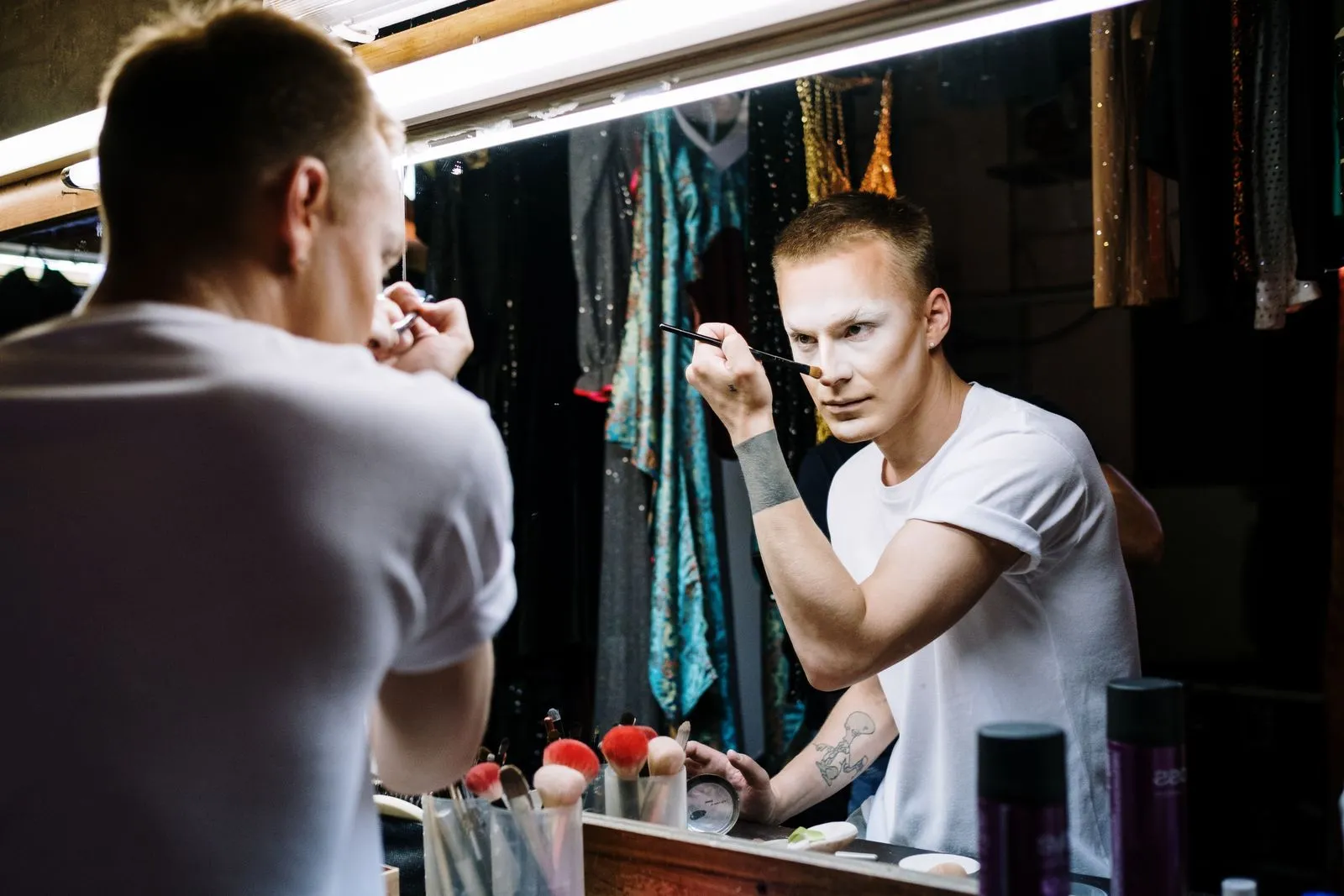
A drag look can read beautifully from the stage and still appear different in a close-up photograph. Lighting shifts how colors appear, distance changes which features stand out, and cameras can emphasize texture or soften detail. Before choosing shades or placing contour, consider where the makeup will be seen and how it will be recorded. A few adjustments to color, contrast, and finish can help your look stay intentional across the room and on screen.
Read the lighting first
Stage lighting can wash out subtle shades and flatten facial definition, especially under bright or cool-toned lights. For a performance, consider using clearer color contrasts and a more defined brow, crease, and lip. If you can, check the venue’s lighting during a rehearsal or ask what tones are commonly used. A look designed under bathroom lighting may need adjustment before it meets a strong spotlight.
Photography lighting varies just as much. Flash can make reflective products appear brighter, while soft, diffused light may reveal delicate color transitions. Test your makeup with the type of light you expect, then take a few photos from different angles. Check whether glitter, highlighter, or pale concealer creates unwanted glare, and adjust placement or finish rather than assuming the mirror tells the whole story.
Scale contour to distance
From the back of a room, small contour changes can disappear. A stage look often needs stronger light-and-shadow contrast around the cheekbones, nose, jaw, and brow to keep its shape at a distance. Blend edges deliberately, but avoid making every transition so soft that the structure vanishes under the lights. Step away from the mirror or use a full-length view to judge the overall effect.
A close camera view shows more of the skin and the edges of each product. Heavy contour can look harsh when the lens is near, while a subtle shape may work better for a headshot or beauty portrait. Consider the planned framing: a wide performance image needs readable structure, whereas a tight crop invites softer transitions and careful blending. Review a test image at its intended size.
Choose color for the camera
Color can shift between the mirror, stage, and final image. Some shades lose intensity under bright light; others become more vivid when photographed. Start with the mood and palette you want, then test the colors in the actual setting when possible. Pay special attention to foundation, blush, and lip color, since mismatches between the face and neck can become more noticeable in photographs.
Camera settings and editing can also change the finished result. If someone else will take or edit the photos, share the look you want and ask whether images will be color-corrected. Avoid relying on a phone screen as your only reference; screen brightness and display settings vary. Keep a record of products and placement that worked, so you can repeat or refine the look for another shoot.
Keep detail in proportion
Fine details help a performance look feel expressive, but they need to suit the viewing distance. Graphic liner, crystals, and defined brows can make features legible on stage. Place accents where they support the expression rather than crowding the face. Check the look from several feet away: details that appear balanced up close may merge together when viewed across a venue.
For photography, small details can become a focal point, particularly in close portraits. Take a test image to see whether liner looks crisp, glitter catches too much light, or texture draws attention away from the eyes. Use products and placement suited to the length of the shoot, and bring touch-up essentials if you will perform and pose in the same makeup. A planned refresh can preserve definition without rebuilding the look.
Treat stage makeup and photographic makeup as related, not identical, choices. Consider the light, distance, framing, and camera before settling on color, contour, and detail, then test the look in conditions close to the real setting. For tailored drag makeup planning in Liverpool, contact Velvet House Makeup to discuss the setting and the finish you want.